
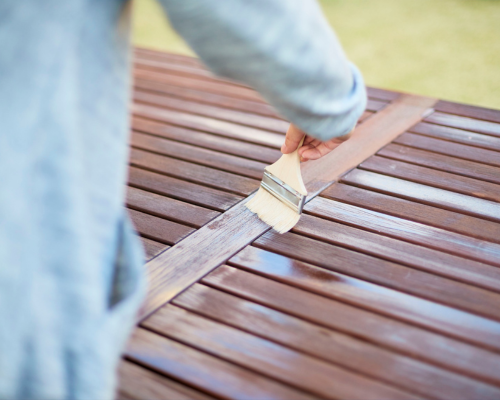
Hayward decks face a different set of conditions than decks in the cooler, foggier parts of the Bay Area. The warmer summers, stronger afternoon sun, and drier conditions in Hayward accelerate UV degradation on deck surfaces that aren’t properly coated and maintained. At the same time, Hayward’s winter rain seasons give plenty of moisture for wood that’s gone without a protective finish to absorb. The result is that decks in Hayward that don’t get regular attention tend to show their age faster than homeowners expect.
The two decisions that matter most before any deck project are whether to stain or paint, and what prep work has to happen before any product touches the wood. Getting those right is what determines whether the finish holds up for two years or six.
Deck Staining vs. Deck Painting: Making the Right Choice for Your Hayward Deck
The stain vs. paint decision has real consequences for durability, maintenance, and the look of the finished deck. Hayward homeowners who understand the tradeoffs upfront make better long-term decisions for their specific situation.
How Stain and Paint Behave Differently on Deck Wood
Penetrating stains soak into wood fibers and protect from within rather than forming a film on the surface. They can’t peel the way paint does when the bond eventually fails, which makes the failure mode more gradual and the refinishing process less labor-intensive. Paint forms a protective film on top of the wood, providing solid color coverage but creating the conditions for eventual film failure and peeling.
In practical terms, stain is the lower-maintenance long-term choice on wood that hasn’t been previously painted. Stain wears gradually rather than failing suddenly, and the refinishing process involves less stripping and prep labor than addressing peeling paint. Paint is the right choice for decks that have been painted before, for situations where solid color coverage is desired, or where the wood’s condition makes stain impractical.
When Deck Staining Is the Right Move for Hayward Properties
Newer decks, decks built from cedar or pressure-treated lumber in good condition, and any deck where the natural wood character is worth preserving are good candidates for stain. In Hayward’s climate, where the summer sun is more intense than in the coastal cities, semi-solid stains with strong UV inhibitor content provide meaningful protection against the fading and fiber breakdown that direct sun exposure causes on deck wood.
Hayward homeowners in hillside properties near the Hayward Hills, where decks often get strong afternoon sun exposure, should prioritize UV resistance in their product selection. A semi-solid stain with good UV protection in a color that complements the home’s exterior can look great and hold up several years before needing reapplication.
When Deck Paint Makes More Sense on a Hayward Property
Older decks with significant weathering, extensive graying, or existing paint coatings are better candidates for paint than stain. Once a deck has been painted, stain won’t adhere properly to the old film without a complete strip back to bare wood, so repainting is the logical continuation. Paint also handles cosmetic issues better than stain, providing solid coverage over surface irregularities and discoloration.
In Hayward, a painted deck in a horizontal sun-exposed location requires regular inspection for early signs of film failure, because moisture getting under peeling paint accelerates deterioration faster here than in cooler, shadier locations. Timely touch-ups and maintenance extend the service life of a painted deck significantly.
Deck Prep in Hayward: Why This Step Determines the Outcome
No amount of quality product makes up for inadequate prep. Hayward decks that are refinished without proper preparation consistently fail earlier than decks where the prep is taken seriously, and the difference in longevity is measured in years, not months.
Cleaning and Washing Hayward Decks Before Refinishing
Every deck project starts with a thorough pressure wash to remove dirt, mildew, algae, and any failing coating material. In Hayward, decks that are partially shaded by structures or trees develop mildew and algae growth that has to come off before any new product goes on. The wash also removes the oxidized, chalky residue from a previous finish that would otherwise prevent the new coat from bonding.
PSI settings matter on wood: too much pressure damages the fibers and raises the grain, leaving a rough surface that’s harder to finish. After washing, the deck needs adequate drying time before any product is applied. Hayward’s warmer, drier summer climate means drying time after a wash is typically shorter than in the coastal cities, but the surface still needs to be confirmed as genuinely dry through the material before coating begins.
Stripping Old Deck Finishes and Removing Failed Coatings
Applying new stain or paint directly over a failing existing finish is one of the most reliable ways to get a short-lived result. The new product bonds to the old coating rather than to the wood, and when the old coating releases, the new finish comes with it. Any existing coating that’s peeling, lifting, or significantly cracked needs to come off before the new product goes on.
The removal method depends on the existing coating: some situations call for sanding, others for a chemical stripper, and decks with multiple old coatings may need both approaches. This step takes real time to do correctly, and contractors who rush through it or skip it create the conditions for early failure regardless of how good the new product is.
Dry Rot and Structural Inspection Before Refinishing a Hayward Deck
Before any coating goes on, deck boards and structural components should be inspected for dry rot and structural weakness. Even in Hayward’s drier climate, winter rain and moisture from irrigation can keep deck framing and board undersides damp enough to support fungal wood decay, especially in decks with limited airflow underneath.
The screwdriver test tells the story quickly: healthy wood resists, rotted wood gives way. Any boards or structural members with active decay need to be addressed before the project continues. Painting over rotted wood is a waste of both product and labor since the finish won’t bond properly to compromised fibers and the decay continues regardless.
Timing and Product Selection for Hayward Deck Projects
Hayward’s climate creates a favorable window for deck refinishing that’s actually longer than what homeowners in the foggier parts of the Bay Area have to work with, but there are still conditions to plan around.
The Best Time to Schedule Deck Staining or Painting in Hayward
Hayward’s dry season, roughly May through October, is the optimal window for deck finishing. Paint and stain need dry conditions and temperatures in the right range, generally between 50 and 90 degrees Fahrenheit. Hayward’s summer afternoons can get hot enough that product applied in direct midday sun dries too quickly, creating lap marks and adhesion inconsistencies. Early morning application on a deck that’s in shade during the hottest part of the day tends to produce the best results.
Hayward’s longer dry season means more scheduling flexibility than in the coastal cities, but summer bookings still fill up fast. If you’re planning a deck project for the peak painting season, reaching out a few weeks in advance gives the best shot at getting on the schedule.
Semi-Transparent vs. Solid Color Stains for Hayward Decks
Semi-transparent stains let the natural wood grain show through while providing UV and moisture protection. They’re the right choice for decks with attractive, clean wood that’s worth showcasing. In Hayward’s sunny climate, a semi-transparent stain with high UV inhibitor content holds its color significantly better than a budget product.
Solid color stains provide full surface coverage while retaining the penetrating adhesion properties of stain, which is why they outlast paint on horizontal deck surfaces. For Hayward decks with wood that has some surface weathering or discoloration, solid stain gives good coverage while still performing better than paint in terms of long-term adhesion on a horizontal surface exposed to the elements.
Get a Deck Refinishing Quote From Hayward Painting Pros
Whether your Hayward deck needs fresh stain, a new coat of paint, or a full strip-and-refinish, Hayward Painting Pros handles the inspection and the work. We’ll give you an honest assessment of what the deck needs and a clear quote before any work begins. Reach out and we’ll come take a look at what you’ve got.